You're not brushing your teeth for long enough
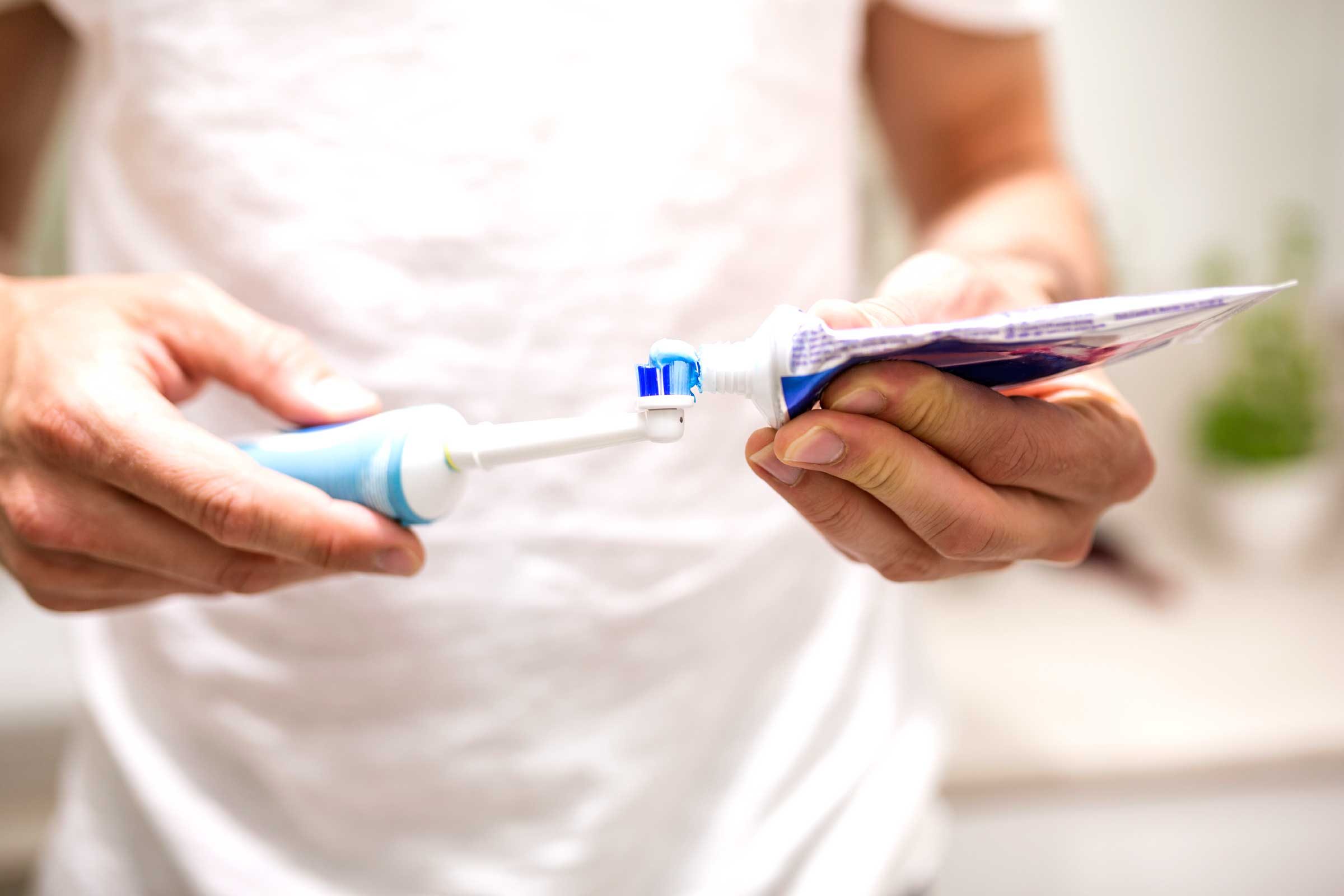
The American Dental Association recommends brushing for two minutes, but many people fall woefully short—and don't even realize it. "Different studies have timed people brushing their teeth and asked them how long they thought they did it for," says Ed Hewlett, DDS, professor of restorative dentistry and associate dean for outreach and diversity at UCLA School of Dentistry. "Some people thought they'd brushed for a couple of minutes, but it can be less than half a minute. Our perception of how long we're brushing is not very accurate." To take out the guesswork, use an electric toothbrush that beeps when you've reached two minutes, or use a timer on your phone or an egg timer. Here are 10 secrets for keeping your teeth white and healthy.
You're brushing too hard

If you brush your teeth like you would scour a pan with baked-on food, you're doing more harm than good. "When you press hard against your teeth and gums, you get a satisfying sensation that you're really getting the teeth clean," says Dr. Hewlett. "But it's not making your teeth cleaner, and it can do harm." The point of brushing is to remove plaque—a bacterial film—which is sticky but also soft, so you don't need to go to town on your teeth to remove it. "Pushing too hard can overstress the gum tissue and cause it to recede, exposing part of the tooth's root," says Dr. Hewlett. "That area can become sensitive to hot and cold. The root is also more susceptible to cavities than the hard enamel part of the tooth." Try one of these home remedies for a toothache.
Your angle is off

Brushing straight across like you're playing the violin isn't the best way to brush your pearly whites. You want to hold the toothbrush at a 45-degree angle—upward for your top teeth and downward for your bottom teeth—so the bristles can sweep and clean under the gum line where plaque can hide. Gently brush your teeth in small circles, as if you're drawing tiny "O's" on them. The exception: If you have an electric sonic toothbrush, you don't need to angle the brush to 45 degrees. "They're designed to go straight on the tooth and you just hold it there for a few seconds," says Sally Cram, DDS, a periodontist in Washington, D.C., and spokesperson for the American Dental Association. "You don't have to make O's or circles with a sonic brush."
Your toothbrush bristles are too firm

If you've noticed on drug store runs that it's getting harder to find "firm" and "medium" bristles, you're not imagining things. Those bristles are often too harsh for your teeth and gums, so most dentists don't recommend them. Instead, choose soft or ultra-soft bristles that can gently get down under the gum line. "Your gum is like a little turtleneck collar, and you need to get under that collar," explains Dr. Cram. "Hard and medium brushes don't do that and can actually abrade the gum."
You're not brushing your teeth for long enough
The American Dental Association recommends brushing for two minutes, but many people fall woefully short—and don't even realize it. "Different studies have timed people brushing their teeth and asked them how long they thought they did it for," says Ed Hewlett, DDS, professor of restorative dentistry and associate dean for outreach and diversity at UCLA School of Dentistry. "Some people thought they'd brushed for a couple of minutes, but it can be less than half a minute. Our perception of how long we're brushing is not very accurate." To take out the guesswork, use an electric toothbrush that beeps when you've reached two minutes, or use a timer on your phone or an egg timer. Here are 10 secrets for keeping your teeth white and healthy.
You're brushing too hard
If you brush your teeth like you would scour a pan with baked-on food, you're doing more harm than good. "When you press hard against your teeth and gums, you get a satisfying sensation that you're really getting the teeth clean," says Dr. Hewlett. "But it's not making your teeth cleaner, and it can do harm." The point of brushing is to remove plaque—a bacterial film—which is sticky but also soft, so you don't need to go to town on your teeth to remove it. "Pushing too hard can overstress the gum tissue and cause it to recede, exposing part of the tooth's root," says Dr. Hewlett. "That area can become sensitive to hot and cold. The root is also more susceptible to cavities than the hard enamel part of the tooth." Try one of these home remedies for a toothache.
Your angle is off
Brushing straight across like you're playing the violin isn't the best way to brush your pearly whites. You want to hold the toothbrush at a 45-degree angle—upward for your top teeth and downward for your bottom teeth—so the bristles can sweep and clean under the gum line where plaque can hide. Gently brush your teeth in small circles, as if you're drawing tiny "O's" on them. The exception: If you have an electric sonic toothbrush, you don't need to angle the brush to 45 degrees. "They're designed to go straight on the tooth and you just hold it there for a few seconds," says Sally Cram, DDS, a periodontist in Washington, D.C., and spokesperson for the American Dental Association. "You don't have to make O's or circles with a sonic brush."
Your toothbrush bristles are too firm
If you've noticed on drug store runs that it's getting harder to find "firm" and "medium" bristles, you're not imagining things. Those bristles are often too harsh for your teeth and gums, so most dentists don't recommend them. Instead, choose soft or ultra-soft bristles that can gently get down under the gum line. "Your gum is like a little turtleneck collar, and you need to get under that collar," explains Dr. Cram. "Hard and medium brushes don't do that and can actually abrade the gum."


